Modulox Drive Modulox Drive

How to Choose the Right Small Electric Motor?

Time:2026-09-15 Author:Henry
0%

Choosing the right Small Electric Motor is rarely about selecting the highest horsepower on a product page. It is about matching torque, speed, voltage, duty cycle, and operating conditions to the real machine. A motor driving a quiet laboratory pump faces different demands from one turning a conveyor belt through dust and repeated starts. The wrong choice may overheat, waste energy, or fail before its expected service life.

The decision also matters at system scale. The International Energy Agency’s Energy Efficiency 2023 analysis identifies electric motor systems as major global electricity users, with motor-driven equipment consuming more than half of industrial electricity in many applications. The U.S. Department of Energy similarly reports that motor systems represent a substantial share of industrial energy consumption. Even a small efficiency improvement can therefore reduce heat, noise, maintenance, and operating cost across thousands of devices. Small details matter.

A reliable selection process starts with the load, not the catalogue. Measure starting torque, continuous torque, peak load, shaft speed, available space, and ambient temperature. Then compare brushed DC, brushless DC, AC, stepper, and geared designs against those measurements. IEC 60034 efficiency classifications can support comparison, but efficiency alone does not guarantee suitability. A high-efficiency motor may still perform poorly with an unsuitable controller or gearbox. That point is easy to miss. Manufacturers’ curves, test conditions, protection ratings, and service data deserve careful review. This guide explains how to evaluate those factors, while acknowledging an uncomfortable truth: application data is often incomplete, and assumptions should be tested before purchase.
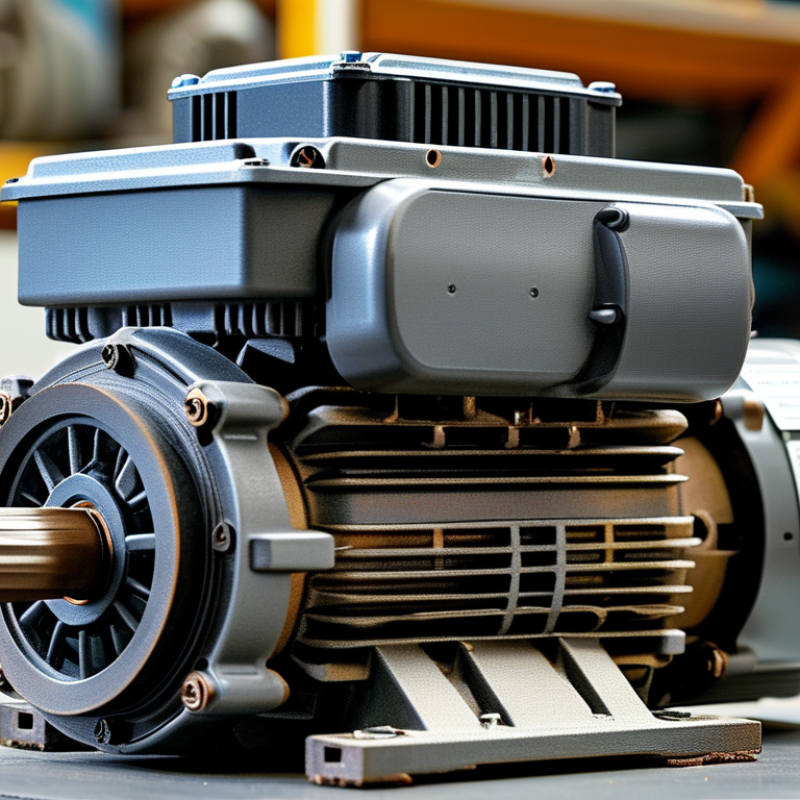
How to Choose the Right Small Electric Motor?

Define the Motor’s Required Motion, Speed, and Torque

Choosing a small electric motor begins with defining the motion, not the motor size. Describe whether the shaft must rotate continuously, move between fixed angles, or travel linearly. A conveyor needs steady rotation. A valve may need controlled positioning and a firm holding point. Record the load path, available space, and movement frequency. In practical testing, a simple sketch often reveals hidden friction or a poorly aligned coupling. Include the starting condition. A motor that moves an unloaded mechanism may stall when the product is attached.

Speed and torque must be evaluated together. Calculate the required output speed at the working shaft, then include any gearbox ratio. Estimate running torque, starting torque, and acceleration torque. Do not select a motor from its peak torque alone. Continuous torque, duty cycle, heat buildup, and stall limits matter more in real equipment. For example, a 0.4 N·m load may require much more during startup. Measure it if possible. My early selections sometimes relied on ideal calculations, and those estimates missed bearing friction. That mistake taught me to add a realistic safety margin, not an excessive one. Oversizing can waste energy and reduce control quality.

Tips: Test the mechanism by hand before choosing the motor. Check whether the load moves smoothly through its full range. Record speed under normal load, not only without load. Confirm torque at the motor shaft after transmission losses. Leave room for brief acceleration peaks, but verify the motor can remove heat during repeated cycles. If position accuracy matters, consider feedback and the required stopping error. Also check noise, vibration, and restart behavior. A quiet bench test can hide problems that appear after several hours. Document each assumption, because an unrecorded assumption can become the weakest part of the design.

Match Voltage, Current, and Power to the Available Supply

Choosing a small electric motor starts with the available power supply, not the motor’s advertised speed. Check the supply voltage, current limit, and output type. A 12-volt motor needs a suitable 12-volt source, but voltage tolerance still matters. Excess voltage can increase heat and shorten winding life. Insufficient voltage may cause weak starting or unstable rotation.

Current ratings require careful judgment. A motor may draw modest current while running freely, then demand several times more during startup. I have seen a motor run smoothly on a bench and stall after a small load was added. That experience changed how I size power supplies. Check the datasheet for running, peak, and stall current. Leave practical headroom instead of matching the rating exactly. A supply that barely meets the figures may work, but it will not be dependable.

Tips: Measure the supply with a multimeter before connecting the motor. Confirm polarity and use short, suitable wires. Select a controller that can handle startup current, not only normal current. Watch the motor during its first loaded test. If it becomes hot quickly, stop and reassess the voltage, load, ventilation, and duty cycle. Power is calculated as voltage multiplied by current, but real motors lose energy through heat, friction, and changing loads. That simple calculation helps, yet it cannot replace testing.

Compare Motor Types for the Intended Application

Choosing a small electric motor starts with the load, not the catalog photograph. In practical testing, measure starting torque, running torque, speed, duty cycle, noise, and available space. A brushed DC motor suits simple battery equipment and low-cost speed control. Its brushes wear, especially in dusty enclosures or machines running for many hours. That trade-off is easy to underestimate.

A brushless DC motor is often better for continuous operation because electronic commutation reduces brush wear. It needs a controller, which adds wiring, cost, and possible setup errors. An induction motor handles steady industrial loads reliably, but it may be bulky for compact battery products. Check its starting current carefully. A stepper motor provides predictable positioning without a feedback sensor, yet it can lose steps when acceleration or load changes. That matters around belts, lead screws, and sudden jams.

For accurate motion, a servo motor combines feedback with active correction. It costs more, but it can maintain position under changing loads. Compare the motor and controller as one system. Verify voltage, stall conditions, thermal limits, shaft coupling, and protection rating. I also run a warm-up test at the real load, then inspect vibration and temperature near the bearings. A spreadsheet may suggest the right choice. Reality can disagree. If the application remains unclear, choose a motor with measurable safety margin instead of trusting nominal power alone.

Check Size, Mounting, Control, and Operating Conditions

How to Choose the Right Small Electric Motor?

Begin with the complete mechanical requirement, not the motor’s outside diameter. A compact housing can still deliver insufficient torque. Measure twice. In practical commissioning, engineers compare continuous torque, peak torque, speed, shaft load, and rotor inertia with the driven mechanism. The IEA’s Energy Efficiency 2017 report estimates that electric motor systems consume about 53% of global electricity. Efficiency therefore affects operating cost, heat, and battery life. Check the required efficiency class under IEC 60034-30-1.

Mounting errors create avoidable vibration. Confirm flange dimensions, bolt patterns, shaft diameter, shaft length, and allowable radial loads. A neat fit can still be wrong. Leave space for wiring and airflow. For control, match the motor with its driver, voltage, current limit, feedback method, and speed-control range. Brushed, brushless, and stepper motors behave differently during startup and stall conditions. The U.S. Department of Energy reports that motor-driven equipment can represent roughly 70% of industrial electricity use, so poor control deserves attention.

Operating conditions often expose weak selections. Check duty cycle, ambient temperature, humidity, dust, shock, vibration, altitude, and enclosure requirements. Heat matters. Continuous operation near stall can damage windings, even when the rated power appears acceptable. Include startup torque and the worst mechanical load, not only average demand. A spreadsheet may look precise, but missing a two-second overload can ruin the choice. Recheck the assumptions with measured current and temperature after installation.

How to Choose the Right Small Electric Motor?

Check the motor size, mounting dimensions, control method, and operating conditions before selecting a motor. The chart below shows common IEC metric frame sizes and their shaft-center heights, which are important for mechanical fit and mounting compatibility.

Selection checklist: Match the shaft-center height and mounting pattern, confirm the required voltage and control method, and verify torque, speed, duty cycle, ambient temperature, dust or moisture exposure, and available installation space.

Evaluate Efficiency, Reliability, Cost, and Maintenance Needs

Choosing a small electric motor is less about maximum speed than matching real working conditions. Record the load, duty cycle, available voltage, and starting torque before comparing specifications. An efficient motor can reduce heat, electricity use, and enclosure size. Check efficiency at the operating point, not only the advertised peak. That detail matters.

Reliability begins with mechanical reality. Dust, vibration, frequent starts, and heat can shorten service life. Look for suitable sealing, insulation class, bearing quality, and a tested thermal limit. In a workshop trial, a motor ran smoothly at no load but overheated under repeated starts. The mistake was mine: I had compared rated power without checking acceleration demand. Small motors still need margin. Do not hide that uncertainty.

Cost deserves a wider calculation. Include the controller, wiring, mounting hardware, energy consumption, replacement time, and technician labor. A cheaper unit may become expensive when its bearings are difficult to replace or its maintenance schedule is unclear. Ask for service intervals, spare-part availability, and test data from a credible supplier. Keep a simple inspection log: temperature, noise, vibration, and current draw. Measure before guessing. Even careful selection can miss a real-world problem, so leave room for testing and adjustment.

FAQS

How should I begin choosing a small electric motor?

Start with the driven load, not the motor’s photograph. Measure starting torque, running torque, speed, and duty cycle. Measure twice.

When is a brushed DC motor suitable?

It suits simple battery equipment and low-cost speed control. Its brushes wear faster in dusty enclosures or long-running machines.

Why choose a brushless DC motor?

It supports continuous operation with less brush wear. However, it needs a controller, extra wiring, and careful setup.

What are the main limits of an induction motor?

It handles steady industrial loads reliably. Its size may trouble compact products. Check starting current before installation.

Can a stepper motor lose position?

Yes. Sudden acceleration, changing loads, belts, lead screws, or jams can cause missed steps. Predictable positioning is not guaranteed.

When is a servo motor worth its higher cost?

Choose it when accurate motion must survive changing loads. Feedback allows active position correction. The price may be difficult to justify.

What mechanical details must I verify?

Check flange size, bolt pattern, shaft diameter, shaft length, coupling, and radial load. Leave room for wiring and airflow.

Which operating conditions can damage a motor?

Heat, dust, humidity, vibration, shock, altitude, and long stall periods can cause damage. Test temperature and current at the real load.

How can I confirm the motor choice after installation?

Run a warm-up test under actual conditions. Inspect bearing vibration and temperature. My spreadsheet may look precise, but reality can disagree.

Conclusion

Choosing the right Small Electric Motor begins with clearly defining the required motion, operating speed, and torque. Consider whether the motor must provide continuous rotation, precise positioning, or controlled acceleration and braking. Next, match its voltage, current, and power requirements with the available electrical supply, allowing reasonable capacity for startup demands and changing loads.

Motor type should be selected according to the application, such as the need for simple operation, accurate control, high starting torque, or quiet performance. Also check the motor’s physical size, mounting method, shaft arrangement, control compatibility, and ability to operate under expected temperature, dust, moisture, and duty-cycle conditions. Finally, compare efficiency, reliability, purchase cost, service life, and maintenance requirements. A motor that fits the application technically and financially will generally provide more stable performance, lower energy use, and fewer replacement problems over time.

Henry

Henry

Henry is a dedicated marketing professional with a profound expertise in the company's offerings. With years of experience in the industry, he possesses an impressive understanding of the market dynamics and consumer behaviors that drive success. Henry is committed to sharing his insights through......