Modulox Drive
Choosing the right Belt Drive Motor is rarely a simple matter of matching horsepower to a machine. The belt, pulley ratio, load profile, operating speed, and installation environment all influence performance. A motor that looks powerful on paper may still overheat, slip, or waste energy during daily operation.
Dr. Austin Hughes, an established author in electric motor engineering, offers a useful principle: “Motor selection must begin with the requirements of the driven load.” That idea deserves attention. The motor is not working alone. It must cooperate with the belt tension, pulley alignment, starting torque, and expected duty cycle. Ignore one detail, and reliability can decline quietly. Sometimes, the smallest pulley causes the biggest problem.
This guide presents seven practical tips for choosing a Belt Drive Motor with greater confidence. It examines torque requirements, speed control, motor efficiency, belt compatibility, environmental protection, maintenance access, and long-term operating cost. These points reflect common engineering practice, but every application remains different. A conveyor, ventilation unit, and workshop machine may need completely different solutions.
Experience also teaches an uncomfortable lesson: the cheapest motor is not always the lowest-cost choice. Poor alignment can create vibration within weeks. Incorrect tension can shorten belt life. Oversizing may increase purchase and energy costs without improving output. Careful selection reduces these risks before installation begins. Still, no checklist replaces accurate load measurements and professional verification. That is where many otherwise careful projects fall short.
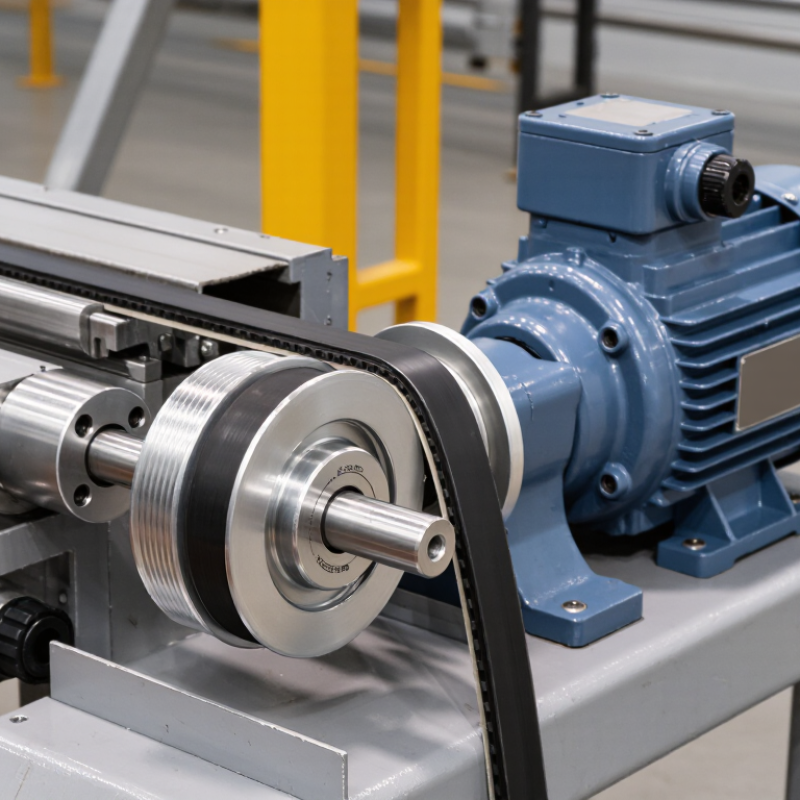
Define the load before selecting the motor. Record the machine’s starting load, running load, duty cycle, and peak resistance. A conveyor carrying wet material may need much more torque during startup than during steady operation. The U.S. Department of Energy reports that motor-driven systems consume more than half of industrial electricity in the United States. Efficient sizing matters. Oversizing also creates waste, higher purchase costs, and poor low-load performance.
Calculate speed and torque at the driven shaft, not only at the motor shaft. Belt ratio, pulley diameter, belt tension, and slip all affect the result. Use this basic relationship: torque equals power divided by angular speed. Check acceleration torque separately. The International Energy Agency estimates that electric motor systems consume roughly half of global electricity, so small sizing errors can become expensive over long operating hours. Keep a safety margin, but do not hide uncertainty inside an oversized motor.
Temperature, dust, alignment, and maintenance access also influence the choice. A motor operating near a furnace needs suitable insulation and cooling. A dusty workshop may require stronger enclosure protection. ISO 10816 vibration guidance can support condition checks, although it does not replace application testing. I have seen calculations fail because belt tension was estimated casually. Measure it. Recheck the figures after installation. Real machines are rarely as smooth as spreadsheets suggest.
Choosing the right belt drive motor begins with the belt, not the motor. A synchronous belt suits applications needing accurate speed transfer and minimal slip. Its teeth must match the pulley profile precisely. For shock loads, a V-belt can be more forgiving. However, it may slip, stretch, and require retensioning. Flat belts work well at higher speeds, but they demand careful alignment. Do not select by speed alone.
Measure starting torque, running torque, duty cycle, and driven inertia before choosing the drive configuration. A single-stage arrangement is simple when the speed ratio is modest. A reduction stage can provide torque, but it increases pulley load and guarding needs. Check shaft spacing, wrap angle, and available adjustment travel. The tensioner should be reachable with ordinary tools. In dusty rooms, enclosed guards and sealed bearings deserve attention. They protect more than performance.
Field checks often reveal issues missed on drawings. I have seen a technically correct motor fail because the belt was too tight for the bearings. Startup loads are easy to underestimate. That mistake becomes expensive downtime. Leave room for inspection, thermal expansion, and future belt replacement. Record the belt type, pulley sizes, tension method, and service limits. This record makes later adjustments safer and more repeatable. A small alignment error can become a large vibration problem.
Belt selection affects efficiency, speed capability, noise, maintenance, and positioning accuracy. The chart shows typical engineering efficiency ranges for common belt types. Actual results depend on belt tension, pulley size, alignment, load, temperature, and operating speed.
Typical efficiency ranges shown: flat belt 95–98%, synchronous belt 96–98%, V-belt 90–95%, and round belt 85–92%. These are general engineering reference ranges rather than guaranteed performance values.
7 Tips for Choosing the Right Belt Drive Motor?
Match the motor’s power to the belt’s real load, not its maximum guess. Check starting torque, acceleration time, pulley diameter, and expected speed changes. A motor that is too small may overheat during startup. An oversized motor can waste energy and create unnecessary belt tension. The U.S. Department of Energy reports that motor-driven systems consume about 70% of industrial electricity. Small efficiency losses matter. Select a suitable efficiency class, then verify performance at the actual operating point. Rated efficiency alone can mislead.
Duty rating deserves equal attention. S1 suits continuous operation, while S3 fits repeated starts and stops with cooling periods. Confirm the load cycle, ambient temperature, enclosure, and allowable overload. The International Energy Agency estimates that electric motor systems use roughly half of global electricity. That makes correct sizing an operational decision, not just a purchasing detail. Also inspect shaft alignment, belt tension, and ventilation. A highly efficient motor cannot compensate for poor installation.
Seven practical checks should fit on one worksheet: power, torque, speed, efficiency, duty, environment, and maintenance access. Leave some margin, but avoid excessive reserve. A common mistake is treating a catalog value as field truth. Measured current and temperature may reveal a different story. The selection process is not perfectly tidy. Recheck it after installation.
7 Tips for Choosing the Right Belt Drive Motor?
Check Operating Conditions and Installation Constraints
Operating conditions should guide motor selection before horsepower calculations begin. The U.S. Department of Energy’s Industrial Motor Systems Market Opportunities Assessment reports that motor-driven equipment consumes about 70% of industrial electricity. Small efficiency losses can therefore become expensive over long operating hours. Record the actual load profile, including starts, stops, speed changes, and peak torque. A conveyor moving wet material needs different protection from a motor operating inside a clean, dry workshop.
Measure the installation area carefully. Note shaft height, belt center distance, available ventilation, access for maintenance, and the direction of belt pull. Dust, humidity, washdown exposure, and ambient temperature affect enclosure and insulation choices. At high altitude, thinner air reduces cooling performance. Belt tension also matters. Excessive tension can overload bearings, even when the motor’s rated power looks suitable. ISO 10816 vibration guidance can support baseline checks, while IEC 60034 standards help evaluate motor performance and operating conditions.
Do not trust a catalog alone.
A practical review should include pulley diameter, belt speed, alignment tolerance, guard clearance, and inverter compatibility. The International Energy Agency has noted that electric motor systems represent roughly 50% of global electricity consumption, making avoidable losses significant. Still, a perfect spreadsheet cannot predict every site problem. I would recheck the design after installation, because real vibration, heat, and belt wear may expose assumptions that looked reasonable on paper.
7 Tips for Choosing the Right Belt Drive Motor
Choosing a belt drive motor should begin with the working environment, not the catalog price. Check load size, operating hours, speed changes, dust, heat, and access space. A motor with suitable torque reduces belt slipping and unnecessary wear. Noise matters. Listen for squealing, vibration, or uneven rotation during a realistic trial. These signs often reveal alignment problems before failure occurs.
Maintenance needs directly affect reliability. Select a design with accessible tension adjustment and clear inspection points. Review belt replacement intervals, bearing service, lubrication requirements, and spare-part availability. Guarding should allow safe checks without forcing technicians to remove half the machine. Keep a simple maintenance log. Small records can expose repeated tension loss or abnormal heating. I once underestimated inspection time, and that mistake made the cheapest option expensive.
Reliability also depends on correct sizing and installation quality. Ask for documented efficiency, thermal limits, expected service life, and test conditions. Compare energy use over the motor’s expected operating hours, not only its purchase cost. Include belts, pulleys, labor, downtime, repairs, and disposal in the total cost. A slightly higher initial price may repay itself through fewer interruptions. However, projected savings are not guarantees. Recheck assumptions with real operating data, because ideal calculations can miss harsh starts, overloaded shifts, or poor alignment.
| Tip | Selection Factor | What to Check | Typical Engineering Benchmark | Maintenance and Reliability Impact | Total-Cost Consideration |
|---|---|---|---|---|---|
| 1 | Match Motor Power to the Driven Load | Confirm continuous power, starting torque, duty cycle, speed, acceleration, and the effect of intermittent overloads. | Choose a motor with sufficient continuous capacity and normally allow approximately 10–15% design margin after calculating actual load demand. | Correct sizing reduces overheating, insulation stress, nuisance trips, and premature bearing wear. | An oversized motor may increase purchase price and light-load energy use; an undersized motor can create repeated downtime and replacement costs. |
| 2 | Evaluate Belt and Pulley Compatibility | Check belt profile, pulley diameter, center distance, wrap angle, belt speed, shaft load, and allowable radial bearing load. | Maintain belt tension within the belt manufacturer’s specified range and avoid pulley diameters below the belt’s minimum recommended value. | Correct alignment and tension reduce belt slip, vibration, pulley wear, and bearing loading. | Higher-quality belts and correctly sized pulleys usually cost more initially but can reduce replacement frequency and energy losses. |
| 3 | Compare Motor Efficiency | Compare rated efficiency at the actual operating load rather than relying only on the nameplate rating. | For many industrial applications, premium-efficiency three-phase motors commonly achieve approximately 90–96% efficiency, depending on power and speed. | Higher efficiency generally lowers heat generation and can reduce thermal stress during continuous operation. | Estimate energy cost using: kW × operating hours × electricity rate. Energy savings often outweigh the higher initial motor price in high-hour applications. |
| 4 | Consider Speed Control Requirements | Determine whether the process needs fixed speed, adjustable speed, frequent starts and stops, or controlled acceleration. | Fixed-speed induction motors are suitable for steady loads; variable-frequency drive systems are commonly used when speed must be adjusted. | Soft starting can reduce belt shock and mechanical stress, while incorrect drive settings may cause motor heating or unstable operation. | A variable-speed system adds drive and commissioning costs but may reduce throttling losses and improve process control. |
| 5 | Review the Operating Environment | Assess dust, moisture, washdown exposure, ambient temperature, hazardous-area requirements, altitude, and ventilation. | Common industrial enclosures include IP55-class protection, but the required enclosure must match the actual dust and water exposure. | Suitable ingress protection and adequate cooling reduce contamination, corrosion, winding damage, and unplanned stoppages. | A more robust enclosure may increase purchase cost but can lower cleaning, repair, and replacement expenses in harsh environments. |
| 6 | Plan Preventive Maintenance | Define inspection intervals for belt tension, alignment, pulley condition, motor bearings, terminal connections, and vibration. | Visual inspections are often performed monthly or quarterly, while belt condition and alignment should be checked more frequently in dusty or high-cycle service. | Routine checks can identify belt cracking, abnormal noise, rising vibration, loose connections, and overheating before failure occurs. | Preventive maintenance requires labor and planned stoppage time but is normally less expensive than emergency repair and production loss. |
| 7 | Compare Reliability and Total Cost of Ownership | Include purchase price, installation, energy, belts, bearings, inspections, spare parts, downtime, and expected service life. | Use a multi-year cost model and compare alternatives at the same load, operating hours, speed, and environmental conditions. | Reliability is improved by proper alignment, correct tension, adequate cooling, suitable bearings, and protection against overloads. | Total cost = purchase + installation + energy + maintenance + replacement parts + downtime. The lowest initial price is not necessarily the lowest lifetime cost. |
Note: The benchmarks shown are general engineering guidelines. Actual motor efficiency, belt life, inspection frequency, and total cost depend on motor size, load profile, duty cycle, ambient conditions, installation quality, and local energy and labor rates.
Match power to the belt’s real load, not its highest possible estimate. Check starting torque, acceleration time, pulley size, and speed changes. Too little power may overheat during startup. Too much power wastes energy and increases belt tension.
Starting torque shows whether the motor can move the loaded belt smoothly. A conveyor carrying wet material may need more torque than an empty belt. Record peak torque, not only normal running load.
Choose a suitable efficiency class, then verify performance at the actual operating point. Rated efficiency alone can mislead. Measure current and temperature after installation. The numbers may disagree slightly.
Continuous operation generally needs a continuous-duty rating. Repeated starts and stops may need an intermittent-duty rating with cooling periods. Check the complete load cycle. Short pauses do not always provide enough cooling.
Dust, humidity, washdown, heat, and poor ventilation affect enclosure and insulation choices. High altitude can reduce cooling because the air is thinner. A clean workshop and a dusty production area need different protection.
Measure shaft height, belt center distance, pulley diameter, belt speed, and guard clearance. Check shaft alignment and belt pull direction. Leave enough room for tools and maintenance access. Small spaces become frustrating quickly.
Yes. Excessive tension can overload bearings, even when motor power appears suitable. Check alignment, tension, and pulley condition together. A tight belt is not automatically a better belt.
Measure operating current, motor temperature, vibration, and belt wear under real conditions. Compare these results with the design assumptions. Recheck the system after several operating cycles. The worksheet may be incomplete.
Choosing the right Belt Drive Motor starts with clearly defining the application’s load, required speed, starting conditions, and torque demands. These factors help determine whether the motor can deliver consistent performance without overheating or unnecessary energy use. Next, select a suitable belt type and drive configuration based on power transmission needs, alignment, noise, and available space. The motor’s power rating, efficiency, and duty cycle should also match the expected workload, including frequent starts, continuous operation, or variable loads.
Before making a final decision, evaluate the operating environment and installation constraints, such as temperature, dust, moisture, vibration, mounting space, and access for adjustment. Consider how easily the belt and other components can be inspected, tensioned, or replaced. Finally, compare reliability, maintenance requirements, service life, energy consumption, and total ownership cost rather than focusing only on the initial purchase price. A well-matched Belt Drive Motor can improve system efficiency, reduce downtime, and provide dependable long-term operation.
