Modulox Drive Modulox Drive

How to Choose a Reversible Motor for Your Application?

Time:2026-11-13 Author:Ethan
0%

Choosing a Reversible Motor starts with understanding what the application must do, not simply matching a nameplate. The motor may need to move a conveyor forward and backward, position a gate, or drive a compact mechanism through repeated cycles. Each job places different demands on torque, speed, and control.

Start with the load. Note its weight, friction, and any force needed to begin movement. Then check the required speed, operating voltage, duty cycle, and available mounting space. Frequent direction changes can increase heat and mechanical stress. Allow for that. A motor that runs smoothly in one direction may behave differently when it stops and reverses under load.

The power source and control method matter, too. Some reversible motors use dedicated wiring or switching arrangements; others require a compatible controller. Confirm the manufacturer’s instructions before planning connections. Also consider the environment: dust, moisture, temperature, and limited airflow can affect service life. Small details count.

A neat specification sheet can still miss a real operating condition. For example, a mechanism may face more resistance when cold or near the end of its travel. That uncertainty deserves attention. Leave a suitable performance margin, and verify the motor with the actual load whenever possible. This guide will explain the key specifications, control options, and application checks that help narrow the choice. The aim is not to select the biggest motor, but one that reverses reliably, fits the system, and avoids unnecessary strain.
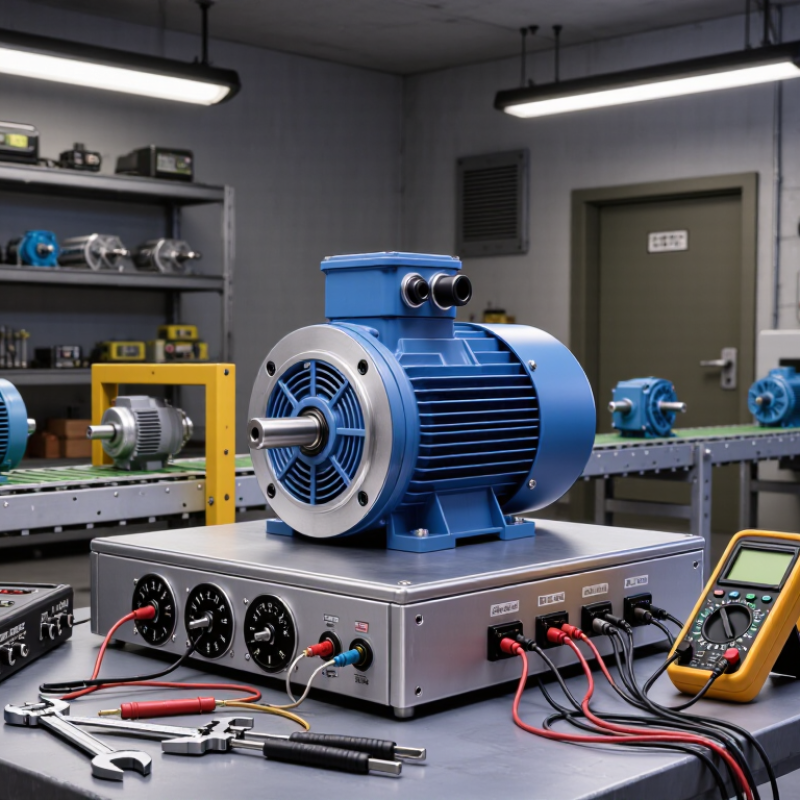
How to Choose a Reversible Motor for Your Application?

Define the Application’s Motion and Reversal Requirements

How to Choose a Reversible Motor for Your Application?
Define the Application’s Motion and Reversal Requirements

Start by describing the actual motion, not just the motor’s direction. Record travel distance, load, speed, cycle rate, and how long the motor rests between moves. Note whether reversals happen under load or after the shaft stops. These details affect required starting torque, braking, gearbox backlash, and heat buildup. Measure it first. A motor that reverses occasionally may not suit a mechanism reversing every few seconds. The U.S. Department of Energy’s 2014 Industrial Electric Motor Systems Market Opportunities Assessment estimated that motor-driven systems use about 54% of U.S. manufacturing electricity. That figure is not specific to reversible motors, but it shows why matching motor and duty cycle matters.

Tips: Count the full cycle, including acceleration, deceleration, dwell, and direction changes. Check the manufacturer’s permitted starts or reversals per hour, rated duty, and thermal limits. If a loaded mechanism must stop precisely, confirm whether the motor needs a brake or an external control system.

Test with the real load. A bench test without the product can hide inertia, jam risks, or uneven movement. One easy-to-miss detail: reversal frequency may rise after the machine speeds up. Leave room for that uncertainty, then verify motor temperature and stopping position during a representative run.

How to Choose a Reversible Motor for Your Application? — Define the Application’s Motion and Reversal Requirements

Illustrative planning targets—not measured industry averages. One direction change means switching from forward to reverse. Define the required reversal rate, speed, load, and duty cycle, then confirm the motor and drive are rated for those conditions.

Choose a Motor Type and Reversing Method

Choosing a reversible motor starts with the motion your application needs. An induction motor with a suitable reversing circuit can handle many steady-duty tasks, such as moving a small conveyor in either direction. For frequent starts, stops, and reversals, check the motor’s duty rating and thermal limits. Reversing too quickly can build heat and strain gears or couplings. The right choice depends on load, speed, operating cycle, and available power.

Then choose a reversing method that matches the motor and controls. A single-phase motor may need a dedicated reversing switch that changes the relationship between its windings. A three-phase motor typically reverses by swapping two supply phases through properly rated controls. Follow the motor’s wiring diagram; wire colors alone are not reliable. Include an interlock where needed to prevent opposing contactors from closing together. Test direction with the load safely disconnected, if the equipment allows it.

Tips: Check the nameplate, wiring diagram, and manufacturer’s duty guidance before selecting components. Note how often direction changes and how long the motor runs between changes. A motor that works well on a bench may overheat in a cramped enclosure. That detail is easy to miss. If the load can coast, allow it to slow before reversing, unless the motor and control system are specifically designed for plugging or rapid reversal.

Match Torque, Speed, Voltage, and Duty-Cycle Ratings

A reversible motor must handle the load in both directions, not just turn at the desired speed. Check the required running torque and starting torque, especially when the shaft drives a loaded conveyor or a heavy hinged panel. Reversal can add stress because the motor may need to slow, stop, and accelerate the load again. Allow for that extra demand.

Match the rated speed to the application, then consider whether the load needs smooth control or simply two fixed directions. Confirm the motor’s voltage matches the available supply, and check frequency and wiring requirements too. A voltage mismatch can cause poor performance or overheating. Small details matter.

Duty cycle is easy to underestimate. A motor rated for intermittent operation may overheat if it reverses every few seconds throughout a shift. Compare the expected run time, rest periods, and number of starts with the motor’s stated duty rating. Leave a sensible margin for unusually heavy loads or frequent switching. It is tempting to size everything tightly; that can be a costly assumption. If the load’s inertia or operating pattern is uncertain, measure it before choosing a motor. The neatest calculation may still miss real-world friction.

Check Controls, Braking, and Protection Features

A reversible motor needs controls that match its load, wiring, and operating cycle. Check that the control circuit prevents forward and reverse commands from being active at the same time. For frequent direction changes, confirm the controller allows enough delay before switching. This reduces stress on the motor and driven equipment. Verify the switch or contactor is rated for the motor’s current, not just its voltage. Small details matter.

Braking depends on what the machine must do. A conveyor carrying a heavy load may need controlled stopping, while a light positioning mechanism may need only a brief pause. Check the required stopping time and how often the motor starts, stops, and reverses. Mechanical brakes can hold a load after power is removed, but they need suitable adjustment and inspection. Electrical braking may shorten stopping time, though it can add heat. Measure the real duty cycle; estimates can be wrong.

Tips: Look for overload and thermal protection, and choose an enclosure suited to dust, moisture, and heat at the installation site. Test the motor under its expected load before routine use. Listen for unusual noise and check for excessive warmth after repeated reversals. Keep wiring diagrams accessible. If the system behaves differently than expected, stop and review the control sequence rather than assuming the motor is at fault.

Verify Mounting, Environment, and System Compatibility

A reversible motor is useful only when its frame, shaft, and wiring fit the machine. Measure the mounting face, bolt pattern, shaft diameter, and extension before comparing torque ratings. Even a small mismatch may require an adapter, increase overhang, and add bearing load. Check how rotation changes, too: some motors must stop before reversing, while others need compatible controls and interlocking. “Reversible” does not mean plug-and-play. Easy to miss.

Environment matters just as much. Note ambient temperature, dust, moisture, washdown exposure, and altitude, then match the enclosure and insulation ratings to the site. IEC 60529 defines IP enclosure protection, but an IP code does not establish chemical or corrosion resistance. The U.S. Department of Energy’s 2014 Improving Motor and Drive System Performance sourcebook reports that motor-driven systems use about 68% of U.S. manufacturing electricity. That figure shows why sizing and efficiency matter, but it cannot predict savings for one installation. Verify voltage, frequency, phase, control method, duty cycle, and load inertia against the motor data sheet. During a loaded test, check direction, current, temperature, and stopping behavior. Record the results; maintenance teams may need them later.

How to Choose a Reversible Motor for Your Application? - Verify Mounting, Environment, and System Compatibility
Selection Dimension What to Verify Practical Guidance Application Check
Mounting arrangement Mounting style, shaft orientation, and available installation space Match the motor’s mounting arrangement and dimensions to the machine. Common IEC arrangements include foot-mounted IM B3 and flange-mounted IM B5; confirm the exact configuration in the motor documentation. Do the mounting holes, flange, shaft height, and installation clearances match the equipment?
Supply and electrical ratings Rated voltage, frequency, phase, current, and connection requirements Choose a motor whose nameplate ratings are compatible with the available supply and control equipment. Do not assume a motor can operate on a different voltage or frequency without confirmation. Do the supply voltage, frequency, and phase match the motor and its wiring diagram?
Reversal method Motor type, approved reversing connections, and control circuit Use the manufacturer’s wiring instructions. Three-phase motors are commonly reversed by interchanging two phases; single-phase motor reversal depends on the winding design and connection arrangement. Is the motor specifically designed for the required direction changes, and does the controller use the approved wiring method?
Reversal frequency and stopping How often direction changes occur and whether the load stops before reversing Frequent reversing or reversing while the motor is still turning can increase electrical and mechanical stress. Check the motor’s permitted duty and switching limits; use an appropriate interlock or stopping sequence where required. Does the expected operating cycle stay within the motor and control equipment limits?
Speed, torque, and load Required operating speed, starting torque, running torque, and load inertia Compare the motor’s torque-speed characteristics with the driven load. If using a gearbox, verify its ratio, output speed, allowable torque, and compatibility with operation in both directions. Can the motor start, run, and reverse the actual load without exceeding its ratings?
Duty cycle and thermal limits Operating time, rest periods, starts per hour, and load variation Check the motor’s duty rating, such as continuous duty or intermittent duty, along with thermal protection requirements. Repeated starts and reversals can produce more heating than steady operation. Does the specified duty rating cover the real operating cycle and ambient conditions?
Environment and enclosure Dust, water exposure, humidity, corrosive substances, and cleaning methods Select an enclosure protection rating appropriate to the installation. IP ratings under IEC 60529 describe protection against access, solid objects, and water ingress; they do not by themselves establish suitability for every chemical or outdoor condition. Is the enclosure rating suitable for the actual exposure, including washdown or outdoor use if applicable?
Ambient temperature and cooling Ambient temperature, airflow, ventilation, and nearby heat sources Confirm the motor’s permitted ambient temperature and cooling arrangement from its documentation. Restricted airflow, high ambient temperatures, or installation inside a small enclosure may require derating or additional cooling. Can the motor dissipate heat properly in its installed position and operating environment?
Shaft and coupling compatibility Shaft diameter, keyway, coupling type, alignment, and external loads Match the shaft interface to the driven equipment. Check permitted radial and axial loads, and align the coupling to reduce vibration and bearing stress. Are the shaft, coupling, alignment, and applied loads within the motor’s documented limits?
Protection and control equipment Overload protection, short-circuit protection, switching devices, and interlocks Use protection and switching equipment selected for the motor’s rated current and starting characteristics. Prevent conflicting forward and reverse commands where simultaneous switching could create a hazard. Are protection settings and reversing controls suitable for the motor and the machine’s risk assessment?
System and standards compatibility Interface with the machine, gearbox, drive, and applicable electrical requirements Verify terminal connections, control voltage, feedback devices, and any variable-speed drive requirements. Check the motor and machine documentation for applicable installation and safety standards. Have the motor, controller, load, and installation requirements been checked as one system?

FAQS

What should I consider when choosing a reversible motor?

Match the motor to the load, speed, power supply, and operating cycle. Frequent reversals can create heat and strain gears.

How does a three-phase motor usually reverse direction?

Properly rated controls swap two supply phases. Follow the wiring diagram; wire colors alone are not dependable.

Can a motor reverse immediately after stopping?

Not always. Let a coasting load slow before reversing unless the motor and controls support rapid reversal.

What safety feature helps prevent conflicting direction commands?

An interlock can prevent forward and reverse contactors from closing together. Check the control sequence during testing.

How do I know whether the controls are properly rated?

Check the motor’s current and voltage, then confirm the switch or contactor ratings. Voltage alone is not enough.

Does a reversible motor need a brake?

It depends on the machine. A heavy conveyor may need controlled stopping, while a light mechanism may need only a pause.

What physical measurements should I check before installation?

Measure the mounting face, bolt pattern, shaft diameter, and shaft extension. A small mismatch can increase bearing load.

Which environmental details matter when selecting a motor?

Check temperature, dust, moisture, washdown exposure, and altitude. An enclosure rating does not guarantee chemical or corrosion resistance.

What should I inspect during a loaded test?

Check direction, current, temperature, noise, and stopping behavior. Record the results; memory can be unreliable.

Can energy-use figures predict savings for my installation?

Not by themselves. Actual savings depend on the motor, load, and operating pattern, so measure the real duty cycle.

Conclusion

Choosing a Reversible Motor starts with understanding how the application needs to move: identify the required direction changes, reversal frequency, operating sequence, and load. Then select a suitable motor type and reversing method, taking into account how the motor will be controlled and whether it must reverse while stopped or during operation.

Compare the motor’s torque, speed, voltage, and duty-cycle ratings with the demands of the system, allowing for starting loads and expected operating time. Check that the controls, braking arrangement, and protection features suit the required performance and operating conditions. Finally, verify mounting dimensions, available space, environmental conditions, and compatibility with the power supply and connected equipment. Considering these factors together helps ensure the motor can reverse reliably and operate safely and effectively in its intended application.

Ethan

Ethan

Ethan is a seasoned marketing professional with a deep expertise in our company's innovative product line. With a passion for sharing knowledge and insights, he takes the lead in regularly updating our corporate blog, where he explores industry trends, product features, and effective marketing......