Modulox Drive Modulox Drive

Why Choose a Compact Motor for Your Application?

Time:2026-11-06 Author:Isabella
0%

A motor may sit behind a panel, inside a mobile device, or beneath a machine guard. In each location, available space affects the design. A Compact Motor can help engineers fit motion into a smaller footprint while preserving room for wiring, cooling, and maintenance. Small can matter.

The right choice depends on more than dimensions. Engineers also consider torque, speed, duty cycle, heat, noise, power supply, and the load the motor must move. A unit that fits neatly may still fall short if it cannot handle frequent starts or sustained operation. Check the manufacturer’s performance data against real operating conditions, not just the headline rating. Details count.

Compact motors can support lighter equipment and simpler layouts, but they do not solve every design problem. Reduced size may involve trade-offs in output, cooling capacity, or service access. Those trade-offs vary by motor type and application, so comparison should be based on verified specifications and practical testing. A prototype can reveal what a datasheet cannot, such as vibration in a tight housing or unexpected heat near nearby components.

This guide examines where compact motors make sense, what to evaluate before selecting one, and which compromises deserve attention. The best option is not always the smallest. It is the one that meets the application’s requirements reliably, with enough margin for actual use.
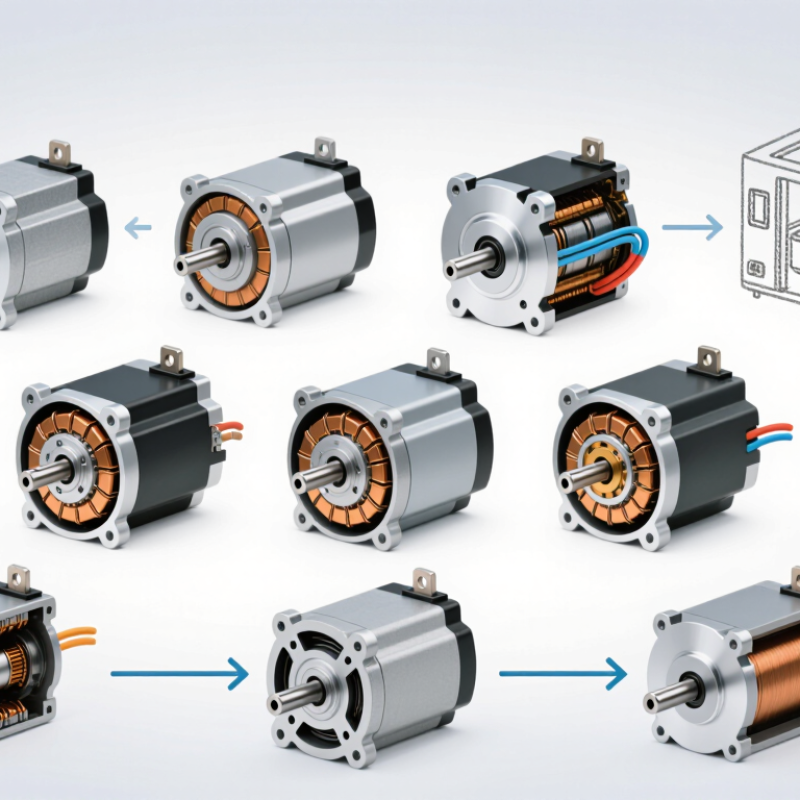
Why Choose a Compact Motor for Your Application?

What Defines a Compact Motor?

What Defines a Compact Motor?

A compact motor delivers useful torque or power within a relatively small physical envelope. “Compact” has no single universal size limit; it depends on the application and available space. Engineers compare dimensions, weight, output, mounting options, and operating conditions. A motor that fits beneath a conveyor, for example, may still be too large for a handheld device. Size is only part.

The design often balances performance with limited room for cooling, wiring, and maintenance access. Check the motor’s rated speed and torque against the actual load, not just its outer dimensions. Also consider startup demand, duty cycle, heat, vibration, and the space needed for connectors or a gearbox. In real installations, those small extras can turn an apparently suitable motor into a poor fit. A compact label alone proves little.

Tips: Measure the full installation envelope, including cables and fasteners. Compare continuous and peak torque ratings, and confirm how heat leaves the housing. Leave practical access for inspection. If space is extremely tight, pause and review the trade-offs: reducing motor size may limit output or cooling, and that balance is not always obvious from a catalog table.

Why Choose a Compact Motor? What Defines a Compact Motor?

Compactness is judged by a motor’s overall envelope and how well it fits the application—not by a single universal size limit. For IEC frame sizes, the frame number corresponds to the shaft-center height in millimeters. A smaller frame can indicate a smaller mounting height, but does not by itself determine power or overall motor dimensions.

IEC frame size is a mounting reference; actual motor length, width, and power vary by design.

How Compact Motors Deliver Power in Limited Spaces

Compact motors can free valuable space without making power a simple matter of size. A smaller housing may leave room for wiring, guards, and nearby components in a packaging machine or camera gimbal. Space matters. Usable torque depends on winding design, supply voltage, speed, and cooling—not dimensions alone.

Heat can be harder to dissipate inside a cramped enclosure. Check the motor’s duty cycle and temperature under the intended load, rather than relying only on a brief bench test. A unit may handle repeated starts but struggle to hold high torque continuously. Gear reduction can increase output torque, while also changing speed, efficiency, and backlash. That trade-off matters.

Fit the complete assembly, not just the motor body. Connectors, cable bends, fasteners, and service tools all need clearance. Then test vibration and noise in the actual structure. It is tempting to optimize for the smallest available footprint, but maintenance access can suffer. Choose a motor based on measured performance at the required load, temperature, and duty cycle, with room for real-world variation.

Which Applications Benefit from Compact Motor Design?

Compact motors are useful wherever space, weight, or movement is constrained. In robotic arms, a smaller motor can fit inside a joint, reducing bulky external components and helping the arm reach tight workspaces. Mobile robots also benefit: less motor mass can leave more capacity for batteries, sensors, or payloads. The International Federation of Robotics reported 4,281,585 industrial robots operating worldwide in 2023, up 10% from 2022. That scale makes compact, serviceable drive components increasingly relevant, though motor size alone does not determine system performance.

Medical equipment, laboratory instruments, portable tools, and compact HVAC units are other strong candidates. A motor in a handheld diagnostic device must fit a narrow housing while limiting vibration; a small pump motor may need steady operation near heat-sensitive parts. The U.S. Department of Energy’s industrial motor-systems assessment estimated that motor-driven systems used about 69% of U.S. industrial electricity. This is an older estimate, not a current universal figure, but it shows why efficiency matters alongside size. Compact designs can also shed heat less effectively, so tight packaging may require lower duty cycles or added cooling.

Tips: Check the motor’s continuous torque, peak load, temperature rise, and mounting dimensions against real operating conditions. A compact unit that overheats during repeated starts is not a space-saving choice. Test it in the actual enclosure, where airflow may be worse than expected.

What Trade-Offs Should You Consider?

A compact motor can free space for guards, wiring, or a smaller machine enclosure. But less space around the motor can also mean less room for cooling. Heat builds quickly when a motor runs near its rated load, especially inside a sealed cabinet. Small footprint, real thermal cost.

The International Energy Agency’s 2011 report, Energy-Efficiency Policy Opportunities for Electric Motor-Driven Systems, estimates these systems use 43–46% of global electricity. The U.S. Department of Energy’s 2014 motor systems sourcebook reports that motors account for about 68% of U.S. manufacturing electricity use. Those figures cover broad motor systems, not compact motors alone. Still, they show why efficiency deserves attention alongside dimensions. A small efficiency loss can matter in equipment that runs for long shifts.

Check the actual duty cycle, not just the peak-power figure. A compact unit may provide the required torque briefly but struggle with repeated starts, low-speed operation, or high ambient temperatures. Smaller rotors can also mean less inertia, which helps acceleration but may make speed control more sensitive to changing loads. A CAD fit is not a thermal test. Ask for temperature-rise and efficiency data at your operating point, then verify them in the real enclosure. This step is easy to skip—and sometimes that is the mistake.

Why Choose a Compact Motor for Your Application? — What Trade-Offs Should You Consider?

Design consideration Potential benefit of a compact motor Trade-off and practical check Best fit when
Installation space A smaller envelope can make it easier to fit a drive into a restricted machine bay or integrate it into equipment. Check the complete outline drawing—not just the motor body—including the shaft, terminal box, cooling clearances, fasteners, and cable bend radius. The available mounting area or machine layout is a primary constraint.
Power and torque A compact design can deliver the required output from a smaller package when its rated power, speed, and cooling are suitable. Compactness does not reduce the load’s torque requirement. For example, 1.5 kW at 1,500 rpm is about 9.5 N·m, using T = P/ω. Confirm starting, peak, and low-speed torque as well as continuous load. The motor’s verified torque-speed curve covers the application throughout its operating range.
Heat dissipation Less volume can simplify installation in compact equipment and reduce the space occupied by the drive assembly. A smaller package may have less surface area for cooling. Check the rated duty, cooling method, ambient temperature, altitude, enclosure, and any required derating. The motor can stay within its thermal limits in the actual installation—not only in open-air conditions.
Duty cycle and overload A properly selected compact motor can suit frequent starts or intermittent operation while keeping the machine footprint small. Do not assume a compact motor can tolerate the same overload or repeated acceleration as another design. Match the declared duty—for example, S1 continuous duty or S3 intermittent periodic duty—and verify start frequency and load inertia. The operating cycle and overload needs are known and fall within the motor’s ratings.
Energy efficiency A compact motor may meet the application’s efficiency target without requiring a larger frame. Size alone does not establish efficiency. Compare rated efficiency at the required power and speed, and check the applicable efficiency class and operating load profile. The selected motor’s documented efficiency meets the project requirements at the expected operating point.
Mounting and integration A smaller motor can simplify integration into an existing machine or reduce the space needed for a new design. Confirm frame dimensions, mounting arrangement, shaft dimensions, load direction, coupling alignment, and compatibility with the drive or gearbox. Similar power ratings do not guarantee interchangeable dimensions. The mechanical and electrical interfaces are confirmed before installation.
Service access A smaller footprint can free up space around the machine for other components. A tightly packed installation can make inspection, wiring, ventilation, and replacement more difficult. Allow access for the tasks required by the maintenance plan. The motor remains accessible for installation, inspection, and planned maintenance.
Total application cost Space savings may reduce redesign effort or help simplify the overall machine layout. Compare total installed and operating cost, including controls, cooling, mounting changes, wiring, maintenance, and energy use—not purchase price or size alone. The compact option meets the performance requirements and provides a practical whole-system benefit.

Selection note: Actual performance and dimensions depend on the motor design and installation. Verify ratings, drawings, duty, and environmental limits for the specific application.

How to Select a Compact Motor for Your Application?

Selecting a compact motor begins with the load, not the available space. Estimate the required torque and speed, including the force needed to start moving the load. A conveyor that runs steadily may need less starting torque than a mechanism that stops and starts often. Measure the mounting area, shaft dimensions, and clearance for wiring. Measure twice; a few millimeters can change the fit.

Next, compare the motor’s rated output with its duty cycle, supply voltage, and operating environment. Frequent starts, heavy loads, or poor ventilation can raise temperatures quickly. Check the manufacturer’s data sheet for thermal limits, speed curves, and mounting details, then confirm that the motor suits the controller and power supply. Compact designs can save space, but their smaller housings may shed heat less easily or leave less room for service. A clean specification table is useful, though real operating conditions can still surprise you.

Tips: Leave room for cables and airflow. Test the motor with the actual load, especially during startup. Record temperature and current after repeated cycles; one short test may not reveal a heating issue.

FAQS

What makes a motor compact?

It delivers useful torque or power within a small physical envelope. There is no universal size limit. Context matters.

Is the motor’s body size enough to judge fit?

No. Measure cables, connectors, fasteners, and space for service tools. A neat CAD fit can still fail during installation.

How should I check whether a compact motor can handle my load?

Compare rated speed and continuous torque with the actual load. Check peak torque too, but do not rely on it alone.

Why does cooling matter in a small installation?

Tight enclosures can trap heat, especially during long shifts or repeated starts. Check temperature data under your expected load. Small space, real thermal cost.

Can a small motor provide high torque?

It may, depending on its design, supply voltage, speed, and cooling. Gear reduction can raise output torque, but changes speed and efficiency.

What operating details should I review?

Check duty cycle, startup demand, ambient temperature, vibration, and low-speed operation. A short bench test may miss problems during continuous use.

Do compact motors always use less energy?

Not necessarily. Efficiency depends on the operating point, not just the motor’s footprint. A small efficiency loss can add up during long shifts.

What should I test before choosing a motor?

Test the complete assembly in its real enclosure. Measure temperature, noise, vibration, and performance under load. I might still miss something.

Conclusion

A Compact Motor is designed to provide useful mechanical power while taking up less space than a conventional motor. Its smaller footprint can make it easier to integrate into equipment with tight dimensional limits, while thoughtful design helps balance output, efficiency, and heat management. Compact motors can suit applications such as portable devices, small automation systems, precision equipment, and machinery where space or weight is limited.

Choosing one involves more than comparing size. Consider the required torque and speed, duty cycle, operating environment, mounting options, and available cooling. A compact design may involve trade-offs in power capacity, thermal performance, or serviceability, so confirm that the motor can meet real operating demands rather than just fit the available space. Matching these requirements to the application helps ensure reliable performance and a practical, efficient design.

Isabella

Isabella

Isabella is a dedicated marketing professional with a sharp focus on driving brand growth and engagement through strategic content creation. With an extensive background in digital marketing, she combines her passion for storytelling with her keen understanding of industry trends to deliver......