 Modulox Drive
Solenoid Motor selection is rarely about force alone. A unit may need to pull a compact plunger through a short stroke, repeat thousands of cycles, and still fit beside wiring, brackets, and heat-sensitive parts. Buyers comparing products for 2026 should check stroke, duty cycle, voltage, response time, mounting dimensions, and operating temperature. A strong headline specification can still hide a poor fit.
The wider automation market offers useful context, though it does not measure solenoid motors specifically. The International Federation of Robotics reported 541,302 industrial robot installations worldwide in 2023 in its World Robotics 2024 report. IFR President Marina Bill described the trend this way: “The global stock of operational robots has reached a new record of about 4 million units.” That growth underscores the need for dependable motion components, but it should not be mistaken for proof that every solenoid motor will suit every machine.
Small differences matter. This guide compares seven options for global buyers by application fit, performance claims, configuration, and supplier information. It also considers practical details such as connector type, documentation, and access to technical support. Product figures should be checked against current datasheets before purchase; specifications and availability can change. No shortlist replaces testing under real load. And “best” is not universal: a fast, compact actuator may be the wrong choice where continuous duty or quiet operation matters more.
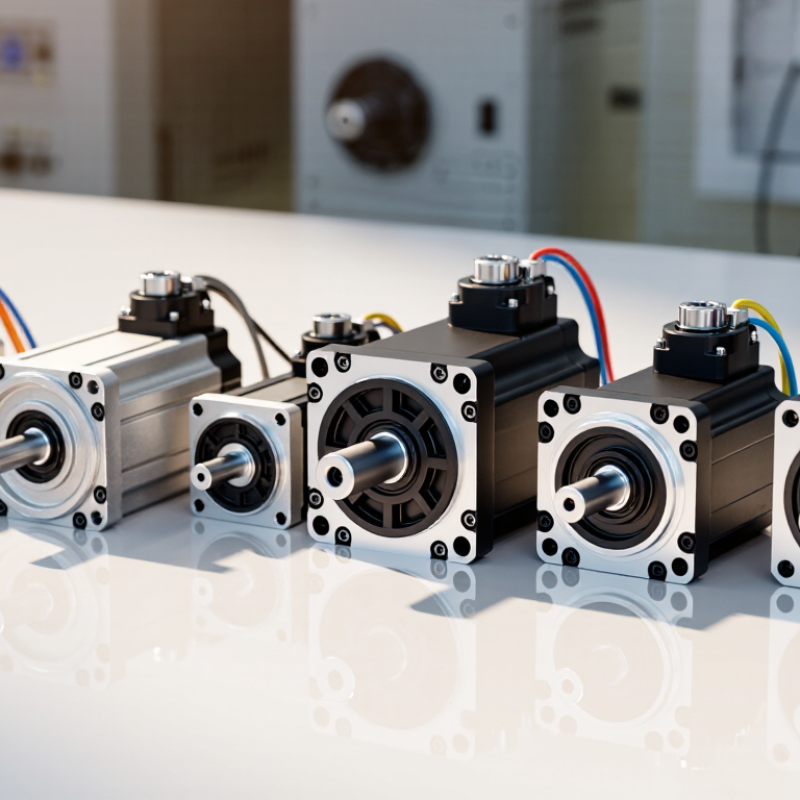
A solenoid motor uses an electric coil to create linear movement. When current flows through the coil, it produces a magnetic field that pulls or pushes a movable iron core, called a plunger. A spring or another mechanical load often returns the plunger when power stops. The motion is direct. No gears are needed for a simple push-pull action.
Inside, the coil surrounds a hollow tube. The plunger slides within it, while a housing guides its travel. A short pulse may move a latch or valve; repeated switching can create back-and-forth motion. That is the basic action. In practice, the tidy diagram leaves out heat, friction, and noise. Coil temperature can rise during frequent or continuous operation, so duty cycle matters. Check the rated voltage, stroke length, force, and response time against the actual load—not just a catalog’s peak-force figure. A plunger that barely clears a mechanism on the bench may bind after installation. It happens. Mounting alignment and return-spring strength can change performance, too. For global purchasing, confirm operating conditions and electrical specifications with the supplier, since a familiar-looking unit may still behave differently under another load or power supply.
| Solenoid Type | Movement and Operating Principle | Common Applications | Potential Advantages | Key Limitations | What Buyers Should Check |
|---|---|---|---|---|---|
| Open-Frame Linear Solenoid | An energized coil pulls a movable plunger along a straight path. A spring or external load commonly returns it when power is removed. | Small latches, switches, vending mechanisms, and light-duty automation. | Simple construction and straightforward integration into compact mechanisms. | The exposed mechanism may need protection from dust, moisture, and accidental contact. Force changes with plunger position. | Required force at the actual stroke, return method, mounting space, coil voltage, and protection needed for the installation environment. |
| Tubular Linear Solenoid | A plunger moves axially inside a cylindrical coil and housing to create a push or pull action. | Industrial interlocks, automated equipment, door mechanisms, and repetitive linear actuation. | The enclosed form can provide a compact, mechanically guided assembly. | Performance depends on the stroke and magnetic circuit; the housing does not by itself establish an ingress-protection rating. | Specified force across the full stroke, alignment, mounting method, cycle rate, temperature rise, and the published IP rating if needed. |
| Push-Pull Solenoid | Designed to apply linear force in a push or pull arrangement, depending on the actuator geometry and installation. | Release mechanisms, linkages, valve controls, and equipment with space for a direct mechanical connection. | Can connect directly to a linkage where a defined direction of travel is required. | “Push-pull” describes an arrangement, not a guarantee of equal force in both directions or at every position. | Whether the model provides push, pull, or both; force in each direction; stroke; return mechanism; and allowable side loading. |
| Bistable Latching Solenoid | Moves between two stable positions and remains in the selected position using a magnetic or mechanical latch. Some designs use opposite-polarity pulses to change state. | Battery-powered equipment, fluid-control systems, and devices that need to retain a state between electrical commands. | May avoid continuous coil power to hold either position, depending on the design. | Requires a suitable switching circuit; the latching mechanism and required pulse conditions vary by model. | Set/reset wiring, pulse voltage and duration, power-loss state, switching life, and the force available at each position. |
| Rotary Solenoid | Converts coil energization into limited angular movement through a rotary armature or internal mechanism. | Indexing, shutter movement, small rotary locks, and control mechanisms. | Provides rotary output without a separate linear-to-rotary linkage in some designs. | Typically produces limited-angle motion rather than continuous rotation like a conventional rotary motor. | Rotation angle, torque over the operating angle, return method, permitted orientation, and mechanical end-stop requirements. |
| Proportional Solenoid | Uses controlled coil current to produce a variable magnetic force or position over a designed operating range. | Hydraulic or pneumatic control valves and applications requiring adjustable actuation. | Can provide more than simple on/off actuation when paired with suitable control electronics. | Accurate control may require a compatible driver and feedback or calibration; response is affected by load and operating conditions. | Current-control requirements, force or position curve, response time, feedback needs, thermal limits, and compatibility with the valve or mechanism. |
| Continuous-Duty Linear Solenoid | A linear solenoid whose coil is specified for continuous energization under stated operating conditions. | Applications that require an actuator to remain energized for extended periods, such as certain control or holding functions. | Can suit sustained operation when the manufacturer’s duty and thermal ratings match the application. | Continuous-duty capability does not mean constant force at all stroke positions; coil heating and ambient temperature remain important. | Rated duty, permissible ambient temperature, coil temperature limits, force at the required stroke, and any required thermal protection. |
Decide whether the mechanism must push, pull, latch, or rotate. Measure the required stroke and load.
Peak force may only occur at part of the stroke. Check the force curve at your actual operating position.
Match its rated voltage to the equipment supply. Check current draw and allow for voltage dips.
Not always. Some coils are designed for brief pulses and may overheat during continuous operation. Check the duty-cycle limit.
Compare the operating temperature range with the enclosure and nearby components. Consider dust, moisture, and heat buildup.
Compact push-pull units suit tight spaces. Tubular models guide the stroke, while rotary designs provide a limited turn. Test it first.
It can use less power between movements, but may need more complex controls. That trade-off is easy to overlook.
Extra force may increase power use without helping the application. I would verify the real load before ordering.
Consider purchase price, heat, maintenance, mounting, and replacement availability. A low-cost coil may cost more over time. Small details matter.
A Solenoid Motor converts electrical energy into controlled linear or rotary motion using an energized coil and a movable magnetic component. Choosing the right model in 2026 means looking beyond basic force or stroke: buyers should also consider voltage, duty cycle, response speed, size, operating environment, service life, and compatibility with the intended equipment.
This overview compares seven types of Solenoid Motor options for global buyers, highlighting how their performance, durability, and cost may differ across applications. It also explains how to assess sourcing requirements, documentation, applicable compliance standards, and local support before purchasing. Matching a motor’s specifications to real operating conditions can help buyers balance efficiency, reliability, and total cost while selecting a suitable solution for their market and application.
