Choosing a Gearbox Motor supplier is rarely a simple price comparison. Global buyers must assess torque, speed ratio, efficiency, noise, sealing, and service support. A compact 0.37 kW motor may drive a packaging conveyor, while a larger helical unit may handle continuous warehouse loads. The application changes everything.
Industry data shows why this decision matters. The International Federation of Robotics reported 541,302 industrial robots installed worldwide in 2023. That figure reflects continuing demand for reliable motion systems in factories and logistics facilities. Grand View Research also identifies industrial gearboxes as a growing market, supported by automation, material handling, and energy infrastructure. These reports provide useful direction, but market estimates vary between research firms. That limitation deserves attention.
This guide examines seven Gearbox Motor manufacturers serving international buyers. The comparison considers product range, torque capacity, gearbox design, motor efficiency, protection ratings, customization, certifications, delivery capability, and after-sales support. Real purchasing decisions often depend on details hidden in a catalogue. A sealed IP65 housing, for example, may matter more than a small efficiency difference in a dusty plant. Availability can matter more than brand reputation. No ranking is perfect. Supplier performance may change by region, distributor, and production year.
Buyers should verify datasheets, test reports, warranty terms, and local technical support before ordering. They should also confirm voltage, mounting position, duty cycle, ambient temperature, and replacement-part availability. This practical review aims to support a more defensible shortlist. It does not replace engineering validation.
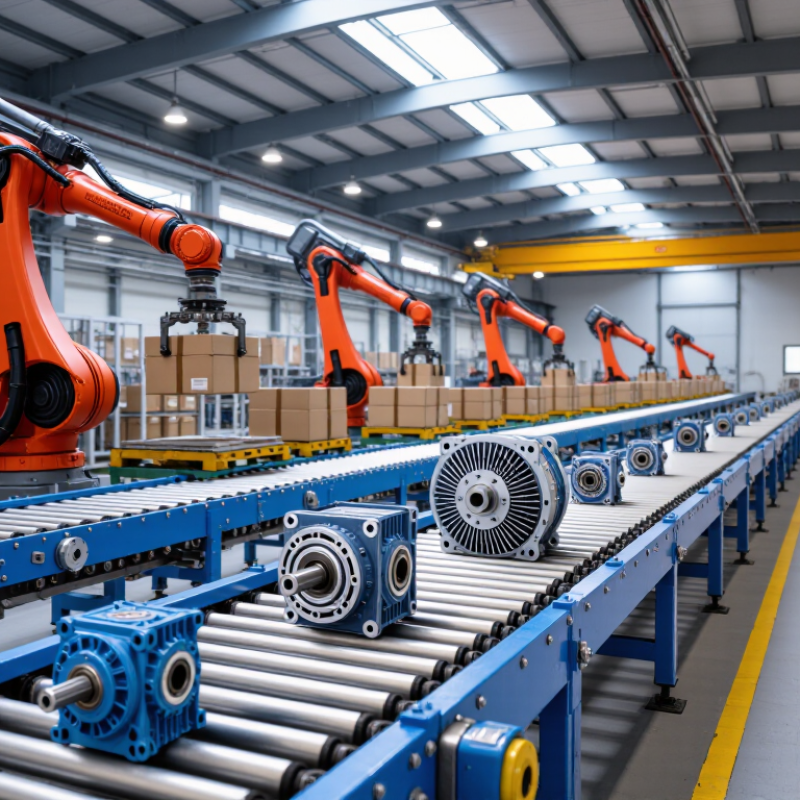
What Defines a Leading Gearbox Motor Manufacturer
What Defines a Leading Gearbox Motor Manufacturer
A leading gearbox motor manufacturer begins with measurable engineering, not attractive claims. The International Energy Agency reports that electric motor systems consume nearly 50% of global industrial electricity. Therefore, efficient gearboxes deserve serious attention. Buyers should examine motor efficiency, transmission losses, thermal performance, and rated service life. A reliable supplier provides test data under realistic loads, including start-stop cycles, shock loads, and high ambient temperatures. Numbers matter.
Manufacturing control is equally important. Look for documented material inspection, gear tooth accuracy, bearing traceability, and end-of-line noise testing. ISO 9001 certification supports process consistency, but certification alone proves little. The European Commission’s Ecodesign framework also emphasizes efficiency across a product’s operating life. This makes lifecycle analysis more useful than purchase price. A lower-cost unit may consume more energy or require earlier replacement.
Experience appears in practical details. Does the supplier calculate duty cycles correctly? Can it recommend sealing for dust, moisture, or washdown areas? Does technical support respond with drawings, torque curves, and replacement guidance? MarketsandMarkets identifies automation and energy efficiency as major gearbox demand drivers. Still, forecasts can miss sudden changes in freight, materials, or customer usage. I would question any manufacturer promising perfect delivery or universal compatibility. The strongest partner admits limitations, validates assumptions, and improves designs through field feedback.
7 Best Gearbox Motor Manufacturers for Global Buyers: What Defines a Leading Manufacturer?
A leading gearbox motor manufacturer is evaluated by more than price. This practical 100-point procurement model emphasizes the factors global buyers typically review when comparing suppliers, without ranking any specific company or brand.
How to read the chart: Product reliability, torque and speed coverage, and energy efficiency receive the highest weighting because they directly affect uptime, operating cost, and application performance. International compliance, sealing protection, customization, and lifecycle support complete the evaluation.
How to Compare the Seven Best Global Gearbox Motor Suppliers
Comparing the seven best global gearbox motor suppliers requires more than checking price lists.
The International Energy Agency estimates that electric motor systems consume about 46% of global electricity. Efficiency should therefore be measured carefully, not assumed from a catalog label. Request rated torque, speed range, service factor, motor efficiency class, and gearbox efficiency at your actual operating point. A supplier that provides test curves and thermal data shows stronger engineering discipline.
The U.S. Department of Energy’s 2022 Motor Systems Market Assessment highlights the large energy impact of industrial motor-driven equipment. Compare each supplier’s lifecycle cost, not only the purchase price. Ask for noise readings, IP protection, insulation class, lubricant guidance, and documented endurance-test conditions. Check whether IEC 60034 and ISO 1328 requirements are clearly referenced. Small details matter. A missing tolerance can become a costly alignment problem.
I would also test delivery reliability through sample orders.
Review lead-time records, spare-part availability, warranty exclusions, and technical response times across regions. Request references from applications with similar loads, duty cycles, and ambient temperatures. Some suppliers present impressive efficiency numbers, yet use different test methods. That makes direct comparison imperfect. My practical mistake was once comparing nominal torque without checking startup loads; the result looked efficient but failed under repeated acceleration. A neutral third-party test can expose such gaps.
Key Product Types and Industrial Applications
7 Best Gearbox Motor Manufacturers for Global Buyers?
When comparing seven gearbox motor manufacturers, buyers should begin with product architecture, not catalog size. Helical geared motors suit conveyors, packaging lines, and material handling systems requiring efficient continuous torque. Worm geared motors offer compact layouts and useful right-angle transmission, although their heat loss can be higher. Planetary geared motors handle demanding loads, precise positioning, and repeated acceleration in robotics or automated machinery.
Small gear motors support medical equipment, smart doors, and laboratory devices where quiet operation matters. Bevel geared motors fit applications needing high efficiency with perpendicular shaft arrangements. For lifting platforms and mixers, manufacturers may provide parallel-shaft or heavy-duty helical units with stronger output bearings. Specifications must include ratio, output torque, service factor, motor voltage, protection rating, and allowable radial load. Numbers matter.
Industrial application changes the selection completely. A dusty aggregate conveyor may need sealed construction and reinforced bearings, while a food-processing line requires corrosion-resistant surfaces and cleanable housing designs. Cold-storage equipment needs lubricants rated for low temperatures. Variable-frequency drives also require attention to motor insulation, braking behavior, and thermal performance.
In practical purchasing, request test data, dimensional drawings, spare-parts plans, and documented quality procedures. Ask how each manufacturer manages noise, backlash, lubrication, and overload testing. Delivery support matters too. A technically excellent gearbox can still fail a project if replacement parts arrive too slowly. No selection is perfect. My own preference can be too conservative when energy cost dominates, so lifecycle calculations should challenge assumptions before approval.
Quality, Certifications, Customization, and After-Sales Support
Choosing among the 7 best gearbox motor manufacturers requires more than comparing catalog prices. In supplier audits, experienced buyers check torque data, noise levels, thermal limits, and documented test results. A polished website is not proof of stable quality. Ask for batch records, inspection reports, and sample performance curves. Small details matter.
Certifications should match the destination market and the application. ISO 9001 indicates a structured quality system, while product certifications may address electrical safety, electromagnetic compatibility, or machinery requirements. Verify certificate numbers and issuing bodies. Do not accept scanned documents without checking their scope. That mistake is common.
Customization can include shaft dimensions, mounting patterns, gear ratios, brake systems, connectors, and control settings. A capable engineering team should explain trade-offs clearly. Higher torque may increase heat, weight, or production time. Get drawings before approving a prototype. Then test the motor under realistic loads, not only on a clean laboratory bench.
After-sales support often separates a dependable manufacturer from a risky supplier. Request response times, spare-parts policies, troubleshooting procedures, and warranty terms in writing. Support should cover installation questions and failure analysis. Language and time-zone coverage also affect real service quality. We have seen technically strong suppliers struggle after delivery. That weakness deserves attention before a purchase order is signed.
How Global Buyers Can Select the Right Manufacturer
Choosing among the seven best gearbox motor manufacturers requires more than comparing catalog prices. Global buyers should examine torque curves, reduction ratios, motor efficiency, mounting dimensions, and duty cycles. A unit running eight hours daily needs different protection from one used intermittently in a clean workshop. Fit matters.
During supplier evaluations, request test reports, material specifications, inspection records, and traceability for critical parts. Ask how each manufacturer controls backlash, noise, heat, and lubrication. Evidence is stronger than impressive claims. Check whether the factory follows recognized quality systems and can provide relevant conformity documents for your destination market. Verify production capacity with a live video tour or an independent audit.
Service quality often decides the purchase after installation. Discuss sample approval, engineering support, replacement parts, warranty limits, and response times before signing. Request references from buyers operating similar machinery, not only large customers. Review packaging details, moisture protection, labeling, and delivery records. A low price may hide costly redesigns or long downtime. No supplier is perfect. I would score technical performance, communication, and after-sales support separately, then compare the weaknesses honestly. Ask one uncomfortable question: what happens when the motor fails during peak production? A reliable manufacturer should answer with a practical process, named responsibilities, and realistic timelines.
FAQS
Request rated torque, speed range, service factor, motor efficiency, and gearbox efficiency. Check performance at your actual operating point. Catalog values may not match reality.
Motor systems consume substantial electricity during operation. Compare energy use, maintenance, spare parts, downtime, and expected service life. A cheaper unit may become expensive after repeated repairs.
Ask for efficiency curves, thermal data, noise readings, and endurance-test conditions. Request dimensional drawings and overload results. Independent testing can reveal hidden differences.
Helical units suit conveyors and continuous-torque systems. Worm units provide compact, right-angle transmission but may lose more heat. Planetary units support heavy loads and repeated acceleration.
Dusty conveyors may need sealed housings and reinforced bearings. Food-processing equipment benefits from corrosion-resistant, cleanable surfaces. Cold environments require low-temperature lubricant guidance.
Check motor insulation, braking behavior, voltage, protection rating, and thermal performance. Repeated acceleration can expose weaknesses. Startup loads matter.
Use sample orders to review actual lead times and response speed. Check spare-part availability, warranty exclusions, and regional technical support. A strong motor is useless if replacement parts arrive too late.
Do not compare nominal torque without checking startup loads and duty cycles. I once made that mistake. The motor looked efficient but failed during repeated acceleration.
Ask whether each supplier used the same test method and operating conditions. Different methods make direct comparison imperfect. A neutral laboratory test may be worthwhile.
No selection is perfect. Challenge conservative preferences with lifecycle calculations, load data, and application references. Small tolerance details can prevent costly alignment problems.
Conclusion
Choosing the right Gearbox Motor manufacturer requires more than comparing prices. Leading suppliers are defined by reliable engineering, consistent production quality, strong testing procedures, and the ability to serve international customers efficiently. Global buyers should compare product performance, torque and speed ranges, energy efficiency, delivery capacity, technical expertise, and experience in different industrial environments. Common product types include helical, worm, planetary, and bevel gearbox motors, which can support applications such as material handling, packaging, conveyors, automation, robotics, and process equipment.
Quality certifications, traceable manufacturing, customization capabilities, and responsive after-sales service are also essential factors. A dependable manufacturer should be able to adapt mounting designs, ratios, motors, protection levels, and control requirements to specific projects while providing clear documentation and technical support. By evaluating product suitability, compliance, communication, warranty terms, spare-parts availability, and long-term service capabilities, global buyers can select a supplier that offers dependable performance, practical customization, and lasting value.
 Modulox Drive
